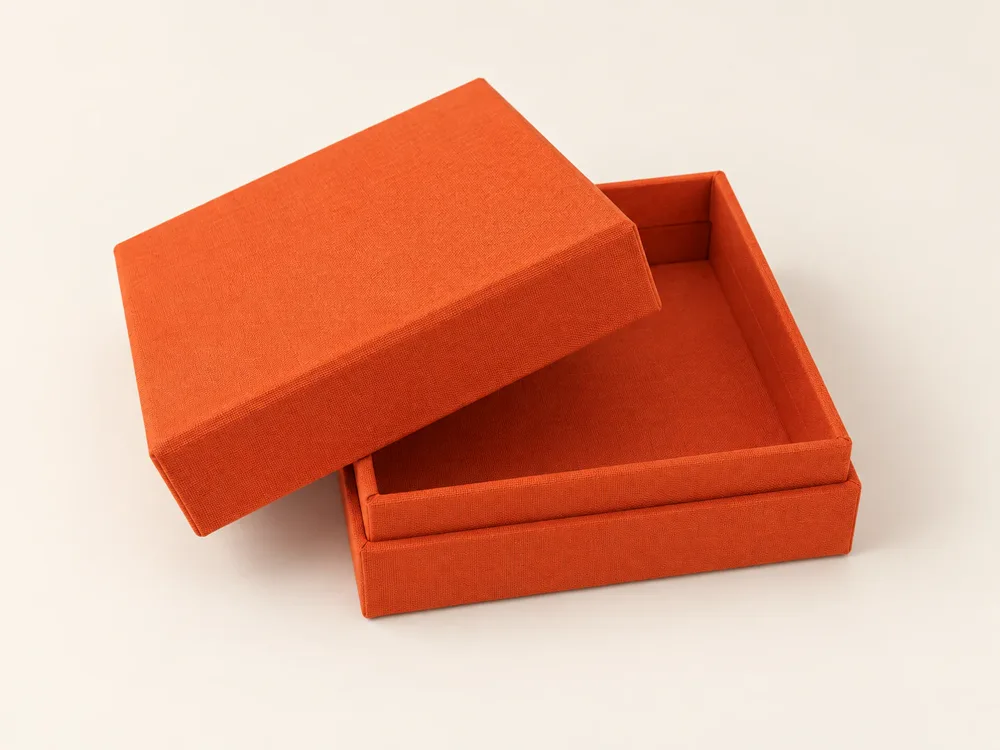

Give each packaging layer a job
Corrugated board has a fluted layer between flat sheets. A printed product carton, a rigid presentation box and an outer shipping carton can serve different purposes. State which layer reaches the customer and which is for transport.
This guide is not a manufacturing or strength guarantee. Confirm the proposed material, structure and available supply scope during the quote.
Check dimensions in the real arrangement
Share product width, length, height, weight, fragile parts and orientation. If the presentation box fits inside an outer carton, use its finished dimensions. Internal and external box sizes differ.
For a gift set, sketch where each part sits. Discuss dividers, protective parts and closure clearance using a sample rather than deciding the void from a photo.
Include the transport scenario in the sample review
A single parcel, grouped cartons and pallet handling are different situations. State units per package, expected storage and handling conditions. Agree on appropriate checks with the supplier.
Open and close a sample around the real product. Check movement, rubbing and the relationship between printed areas and fold lines. Keep the approved sample and written specification together.
Questions we hear often
Does every rigid box need an outer carton?
That depends on the product, transport method and accepted risk. Appearance alone does not prove transport suitability.
Can flute type or strength be chosen from a photo?
No. A photo helps explain arrangement; material and performance need supplier review.
How do I start an outer-packaging request?
Share dimensions, quantity and shipping scenario. Confirm current production or supply scope and the sample process in the quote.